There are decades where nothing happens; and there are weeks where decades happen
I love that quote above, it is attributed to Lenin although there is no evidence that he actually said it.
I think it is the definitive quote that sums up these current times. Decades are happening in weeks.
In just the last week
Fable 5.1 was released by Claude
ChatGPT released Astra 6
Apparently both of them are most intelligent model in the world and the naming person at OpenAI clearly has ADHD because that new model named Astra is a different name from Sol which is different from their one before.
Imagine if Microsoft Excel was called Excel 1.0, then Excellent 2.0 , then Doug 3.0, then Aunty Susan 4.3.
I don’t know, am I now a boomer? Can’t they stick to one name? Is this the TikTok equivalent of how you are meant to name things now? So the kids don’t get bored?
But how good would an Excel spreadsheet be if it was actually an Aunty Susan 4.3 spreadsheet. You could go to a Chinese restaurant and get your mate to pass you a printed copy of his Aunty Susan spreadsheet on the lazy Susan while you eat some dumplings.
But yeah, rah rah rah, intelligent model, wow so smart, omgosh it is smarter than everyone and everything in the world.
BORING!
That’s not an article. We all get it. Models are so smart. Can’t the robot slave armies hurry up and stop sucking so much at dancing?
I cannot handle how funny watching robots absolutely smash themselves in the face is.
But you know what is a good article. This guy. I’ve become obsessed with this guys YouTube channel called the Luxury Academy.
I just love the way he commits to the whole being an upper class broksi and the full commitment to the way he says sandwich. He announces it like a royal decree. "I believe I shall have a sand-widge."
Mr Luxury Sand-Widge Man is also a psychologist and in this video he talks about how do you win customers who are loyal to other brands? In this case it is a makeup example where someone has used the same makeup for 15 years.
The answer is that you don’t try to change their existing habit as humans love reverting to what they know (I have had the same Subway sand-widge order for 20 years, as it turns out) instead you add something new to their routine. This helps to break status-quo bias which is that we as humans love keeping things exactly as they are, even if changing could lead to a better outcome.
But just like last year when the meme was how people were thinking about the Roman Empire, that example he used got me thinking about AI.
Because sand-widge man got me thinking that we are all trying too hard to change what people are doing when we roll out AI. Our colleagues already use their crappy Excel aka Aunty Susan 4.3 spreadsheet, they don’t know want something in the cloud.
I call this pipeline work.
Pipeline work is any work used in the process of creating your report/widget/thing of output that you normally do.
I could have called it, stuff you already do work.
My theory is that right now everyone is doing too many projects in this pipeline work area. They are pushing shit up hill and trying too hard to get people to change behaviour.
Here are the warning signs that you are doing this
You have to do training sessions to get people warmed up to an idea.
You have a version that works and you are replacing it with your AI version
Here are some examples
You are trying to automate reporting and you are a consultancy. At my old engineering company that would have been trying to automate land development reports.
You are trying to automate marketing copy and the marketing production chain.
Status quo bias shows why people hate your new system. This is why your analyst team will just reject your whole AI project. They don’t want to change. Particularly if they aren’t the leader.
As much as I’m bantering, I’m also being serious and the thing I see is that really cool projects that the exec team are excited about get rejected by teams like how the body rejects a new organ. In a couple of instances they then self sabotage the system by purely making it as bad as they can so that eventually it will die and they can go back to what they are doing.
But sand-widge man convinced me to not get angry with them and instead do exactly what the Romans did, put them in the coloseum and make them fight to the death, (editors note, I meant to say, attack them in the flanks).
So here is what we do instead.
We don’t try to change anything. We don’t look to do any intro tutorials or any change committees. If you have Excel, keep Excel. If you are printing pages out manually, then good for you, you do you, keep those forestry companies in business. Keep on printing.
What we do instead is that we do new projects that don’t touch the main pipeline.
So what exactly is that?
I call it thinking work. I define thinking work as things that exist outside of the main pipeline that still give a benefit.
Here are some examples.
Stalking yourself on ChatGPT and mystery shopping the crap out of yourself and doing deep research on yourself
Actually lets stop with that example. You see the power of this? This is a thinking project. It involves a lot of thinking. Whenever you mystery shop yourself it is very humbling, ChatGPT will tell you how you suck and how your competitors are way better than you (although maybe its just mine as I keep mocking the naming guy at OpenAI and laughing at robots that fall over when dancing. I am clearly on a blacklist marked Kill Painfully when AGI finally gets here, but honestly when they fall over and their legs are wobbling and everyone in the crowd is staring quietly, I can’t handle how funny that is).
But I often find that absolute gold comes out of that thinking work. Gold as in, ‘what the heck is our actual point of difference?’ Gold as in, ‘why the heck did we choose to be a consultancy in the first place?’ Gold as in, ‘I should fundamentally rethink my entire customer funnel and pipeline.’
You get the point. There is so much gold that comes from thinking work. Gold that could cause you to fundamentally rethink your pipeline in the first place.
Then what you do is you link back your thinking work to the pipeline work and you get much better results.
So you might come back from the customer research exercise and then realise you should redesign your onboarding flow. Well you go away and do that and let the pipeline team take care of the rest.
Are you confused?
Another example then.
This time our thinking work is going to not involve automating the pipeline but instead we are going to extract intelligence out of the pipe that we already have.
Lets go back to my reporting example. I used to be fast as at writing land development reports. If you wanted to subdivide a property, I was your boy, I still remember manhole locations when I drive over Olsen Avenue. I am cool. Engineers all do this by the way. Engineers are cool.
What is a thinking project in this example?
Building a knowledge graph is one idea. Embedding the knowledge of all reports and doing that across a team so that we all get better together.
See I as the previous pipeline guy who writes land development reports would have loved that because it was new. You weren’t taking away my job, you instead are adding something. Just like the makeup routine.
Another thinking example might be, could we do a deep dive with associated professionals in the industry and partner if we made a recommendation to their products in our report. This is all the stuff that AI is good at.
It is augmenting the main flow in the way that we have never done before.
Thinking projects are harnessing what AI is really good at, which is thinking and helping you do things and think in ways that you don’t currently.
But due to status quo bias they are great to start with. You aren’t going to step on any toes and they are typically faster and easier to implement.
This whole article is another way of saying this.
“Insanity is doing the same thing over and over and expecting different results
Albert Einstein didn’t actually say this either apparently. It’s from a narcotics handbook
Before you go and do more things in your pipeline, take some time to use the worlds smartest models and figure out how to do it better. You can even do it while you are eating a sand-widge
Here is some other ways you could get started.
Find out why customers nearly didn’t buy.
Find recurring customer frustrations buried in support tickets.
Extract buying objections from sales calls and emails.
Find expertise buried in old reports and proposals.
Identify where projects repeatedly go over budget.
Find opportunities to expand services for existing customers.
Turn meeting notes into a picture of problems that never get resolved.
Research what customers do before they need you.
Find an audience you’ve overlooked.
Test whether your point of difference is actually different.
Work out which customers are a terrible fit.
Work out on your customer journeys and map them
Find the service customers keep indirectly asking for.
Look outside your industry for better ideas.
Book Club
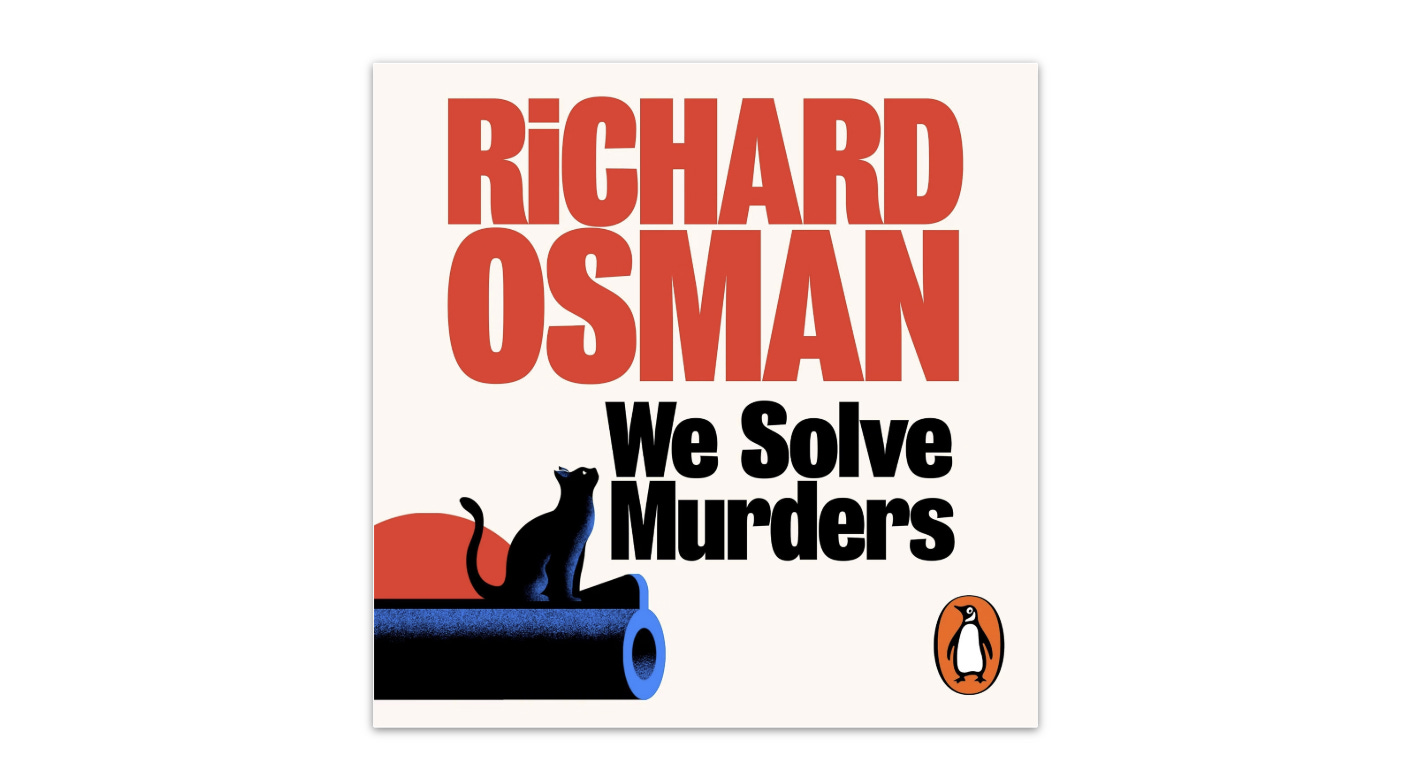
I love this author, everything is easy to read and its quite good when you are stressed out from work.
View the book on Amazon here.
I’m an Amazon affiliate, if you make a purchase I make a small commission.
Other Articles I Wrote This Week