


The cover this week is a dedication to my Melbourne trip as I went to the AWS Prototyping Summit.
So naturally I have reflected on being a New Zealander all week as that is what happens when you go to Australia and have to go through their ridiculous customs system, where they have ordered like 4 ticket machines for the entire country.
It’s also what happens when you go to your first AFL game and realise, holy moly that is a lot of referees in yellow.

One interesting thing being from New Zealand is the fact that we “often don’t have enough”.
Money for projects is usually capped, our population is small and we also are more isolated so things are expensive.
Yet we have high expectations for ourselves. Take the All Blacks or our Olympic team, the expectation is that we find a way to win.
Here is the Paris 2024 medal table.

Lets now do the favourite graph that New Zealanders love, gold medals per population.

Either way its something that I’m proud of, a country of 5 million people coming 11th in the world is pretty cool.
This is why I particularly love the book, Inside The Box, because it shows why this can be such a good thing. Constraints make us better.
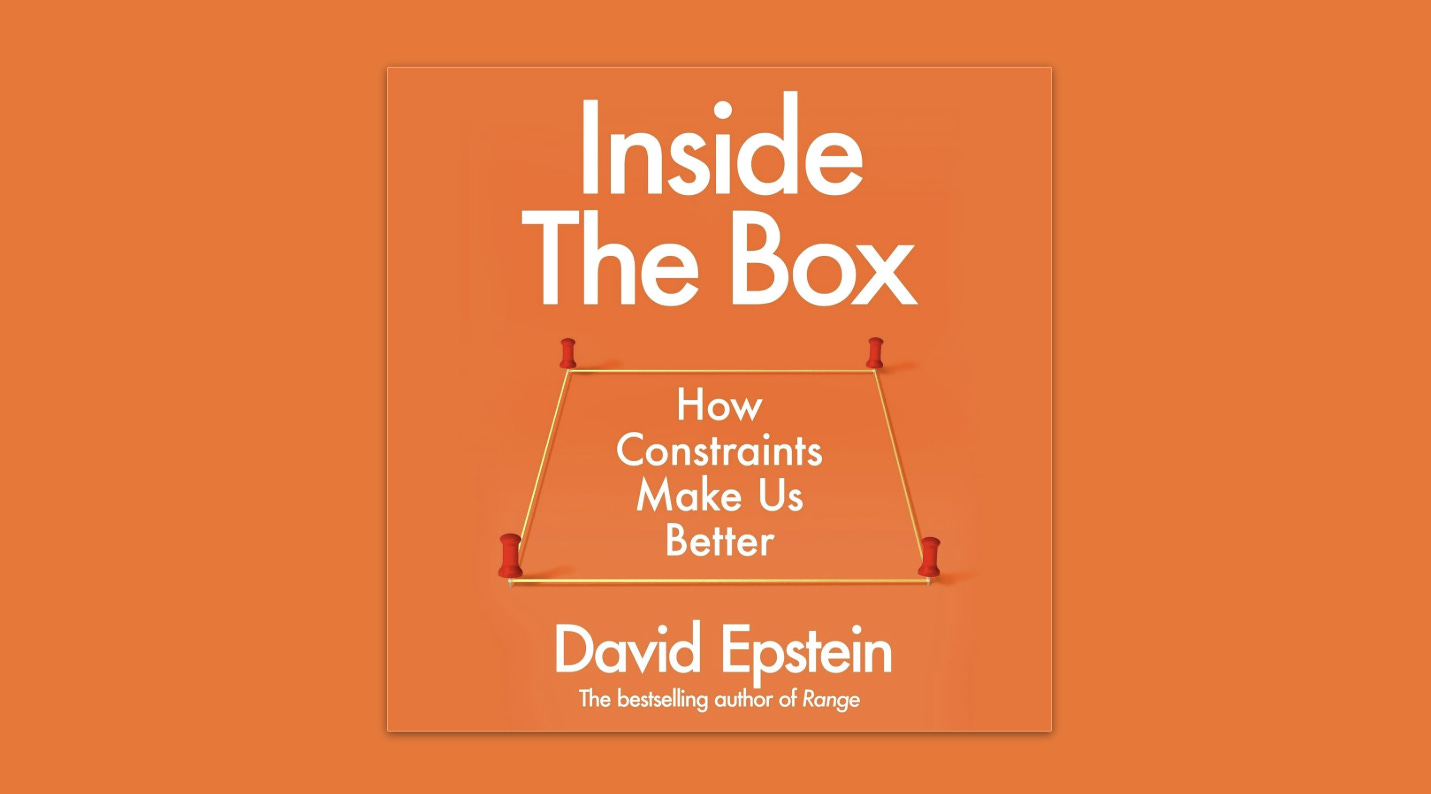
View the book on Amazon here.
The book talks about how constraints help, how tight briefs product better work and how teams with smaller budgets and timeframes can outperform bigger ones.
It starts with a company that raised a bunch of money before the dotcom era, they had the best engineers, unlimited financial resource and were trying to build a screen similar to what we use on smartphones today. The company didn’t ship anything and ended up going bankrupt. Too much of a good thing did not help them or as David Packard famously said "companies die from indigestion, not starvation."
I wanted to share some practical tips today on how I think inside the box and I think this is particularly relevant for a world with AI.
AI makes it too easy to bloat out and die from indigestion. I am seeing so many people with AI tummy aches.
The first trick - no one is coming to save you
This is a bit random but I think its a great mindset to have. That is, no one and nothing is coming to save you.
The Vikings would say you need to burn your boats so that you have no choice but to fight.
That means you aren’t getting more budget, more tools, more things, no smarter person is coming, it’s just you and the team and you have what you have.
You have to find a way.

I think businesses make too many excuses. I didn’t have time, I didn’t have this, I didn’t have that, and those excuses blind your brain to finding a way and figuring things out.
To think inside the box you have to believe and commit to the box. A sports team has to think inside the box because the game is coming up whether they like it or not and there is no where to hide.
You can’t hold onto hope that someone else will solve something for you. So if the budget is $50,000 then the budget is $50,000. The team you have is the team you have.
Burn your boats and commit to thinking inside the box.
The second trick - make the box even smaller
Once you have committed to solving the problem, the next thing I have learnt is to take whatever box you have and cut that up into four.
Haha! Now no one is coming to save you and now you have a quarter of the budget you thought you had. Isn’t this great!
If the budget is $100,000 then cut it up into $25,000 chunks.
If the timeline is 4 months, then cut it up into 1 month chunks.
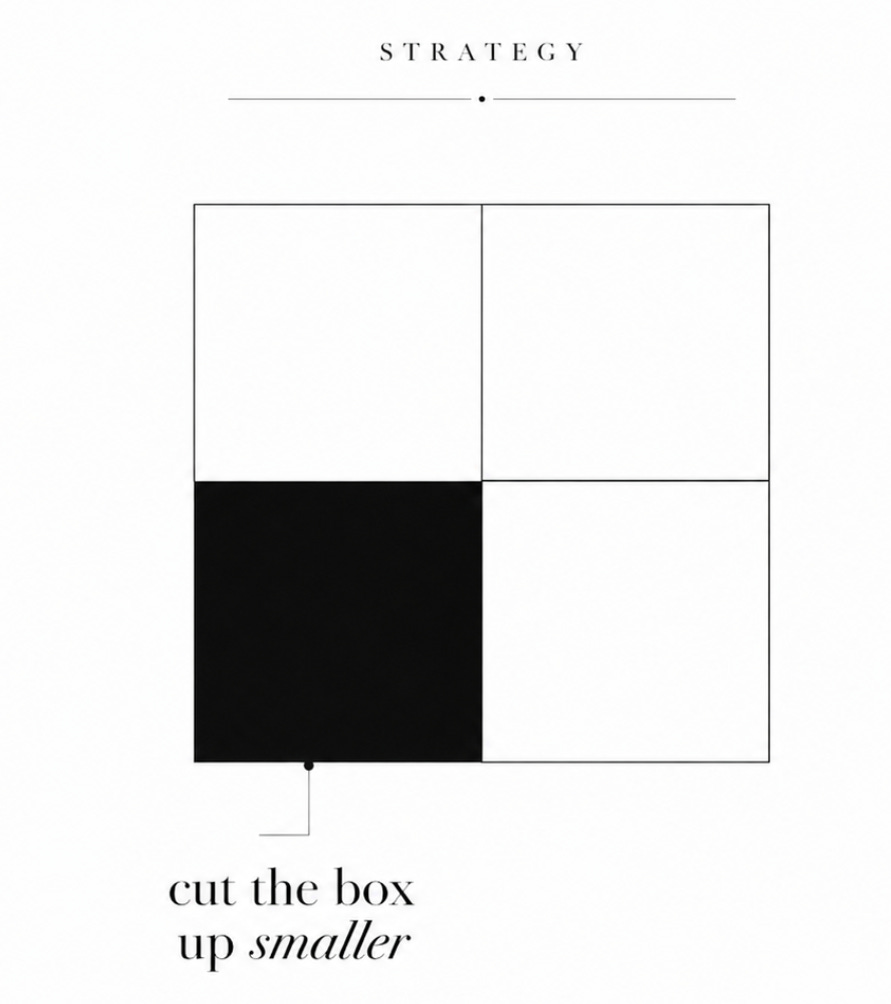
Yes even if you don’t have a big box in the first space, still cut it up. The biggest mistake most people make is to make their first thing too big. We want to reduce everything to the smallest part at first.
Project management system? Just focus on building the jobs section first
Financial tool? Start with 1 report
Computer Vision? Start with 1 clean problem statement as small as you can.
Your personal startup. Make it 1 or 2 screens at most.
A half marathon training plan? Just worry about the first 2 weeks
Cut out everything else.
If you use the word “future”/”later”/”another phase” then delete whatever you are talking about
If you haven’t tested it with a user, then delete it.
The reason for this is simple. I don’t want there to be any distractions to the actual problem we are solving. There is a thing called the bike shed effect, where people will focus on building the bike shed rather than the nuclear power plant, because it is smaller and easier to think about than the harder problem. I want you to build a nuclear power plant.
With the first two tricks in place, we have now honed in on something smaller and no one is going to save us, this leads us to the next trick.
The third trick - read the instruction manual
This is honestly the greatest trick and the one that I know you probably won’t do. But I’m going to put my money where my mouth is and show you the power of doing this by doing it myself with a real example.

You see it is amazing how many times the answer to the problem you are solving is in the instruction manual itself. Its just that we don’t think to look there first. We like to make things harder than it is or we rush into solving a problem. Fire, Ready, Aim is how most people go about things.
Case Study - Chris Reads the ChatGPT Instruction Manual For The First Time
I’ve never actually read the instruction manual for ChatGPT but lets see what I learn from it.
You can access it here.
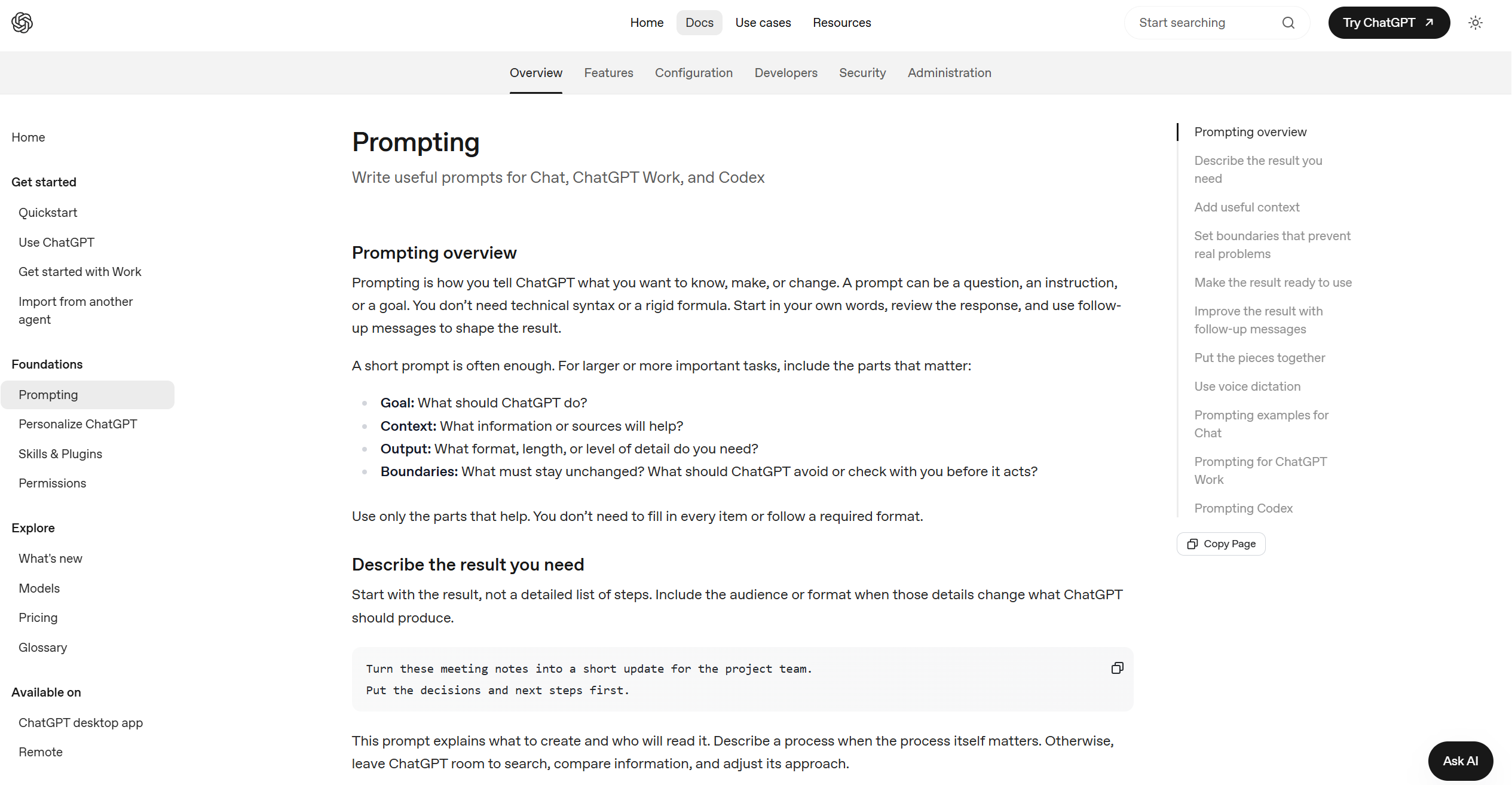
True to form by me simply reading the instruction manual, I learnt a lot.
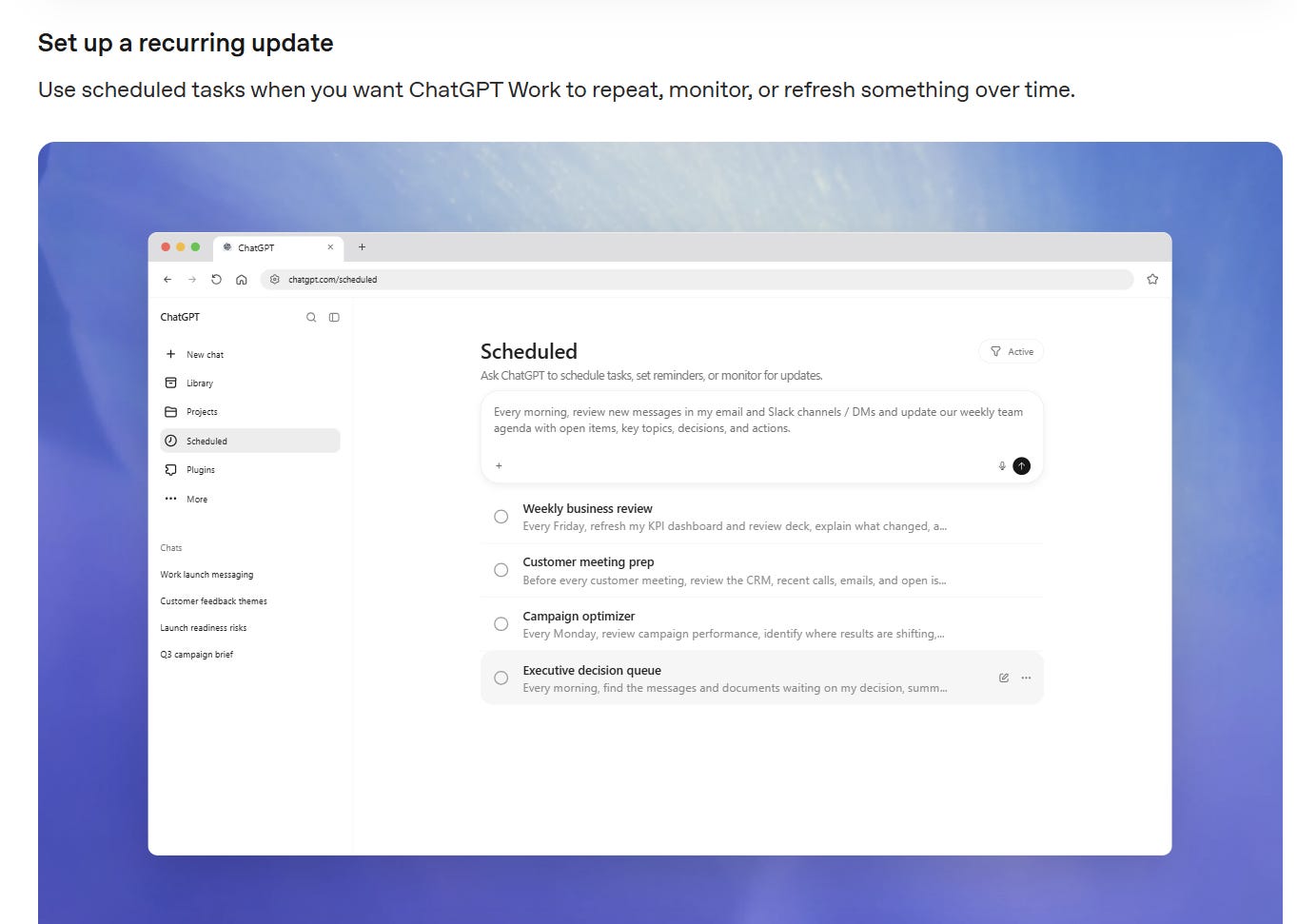
Scheduled Tasks
I must be blind because I missed the fact that ChatGPT has scheduled tasks.

Next you are going to tell me that it has been there for a year or something.
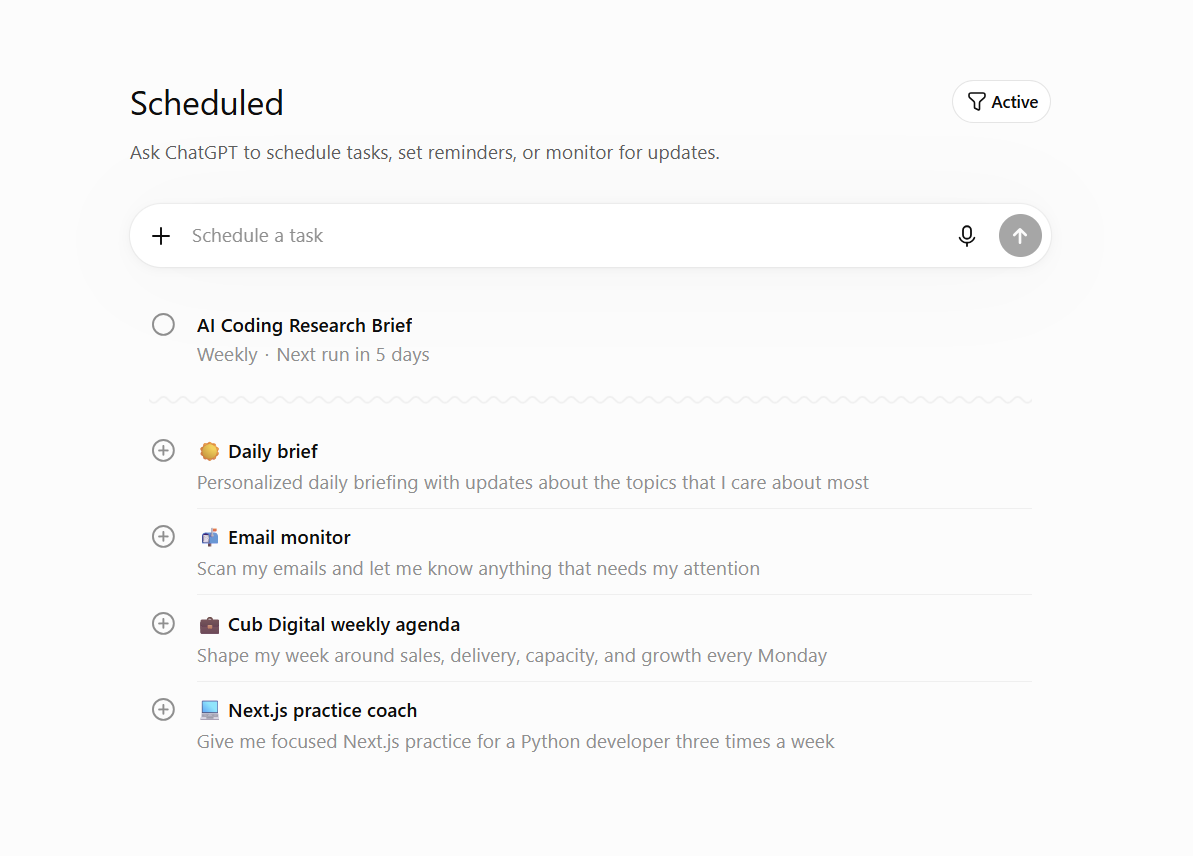
Well would you look at that. I can now get handy recurring tasks done automatically by ChatGPT.
Want a daily email briefing? Scheduled tasks can do that
Want it to help me practice a new skill with some exercises? Scheduled tasks can do that
Who would have thought, such a great feature is sitting right.
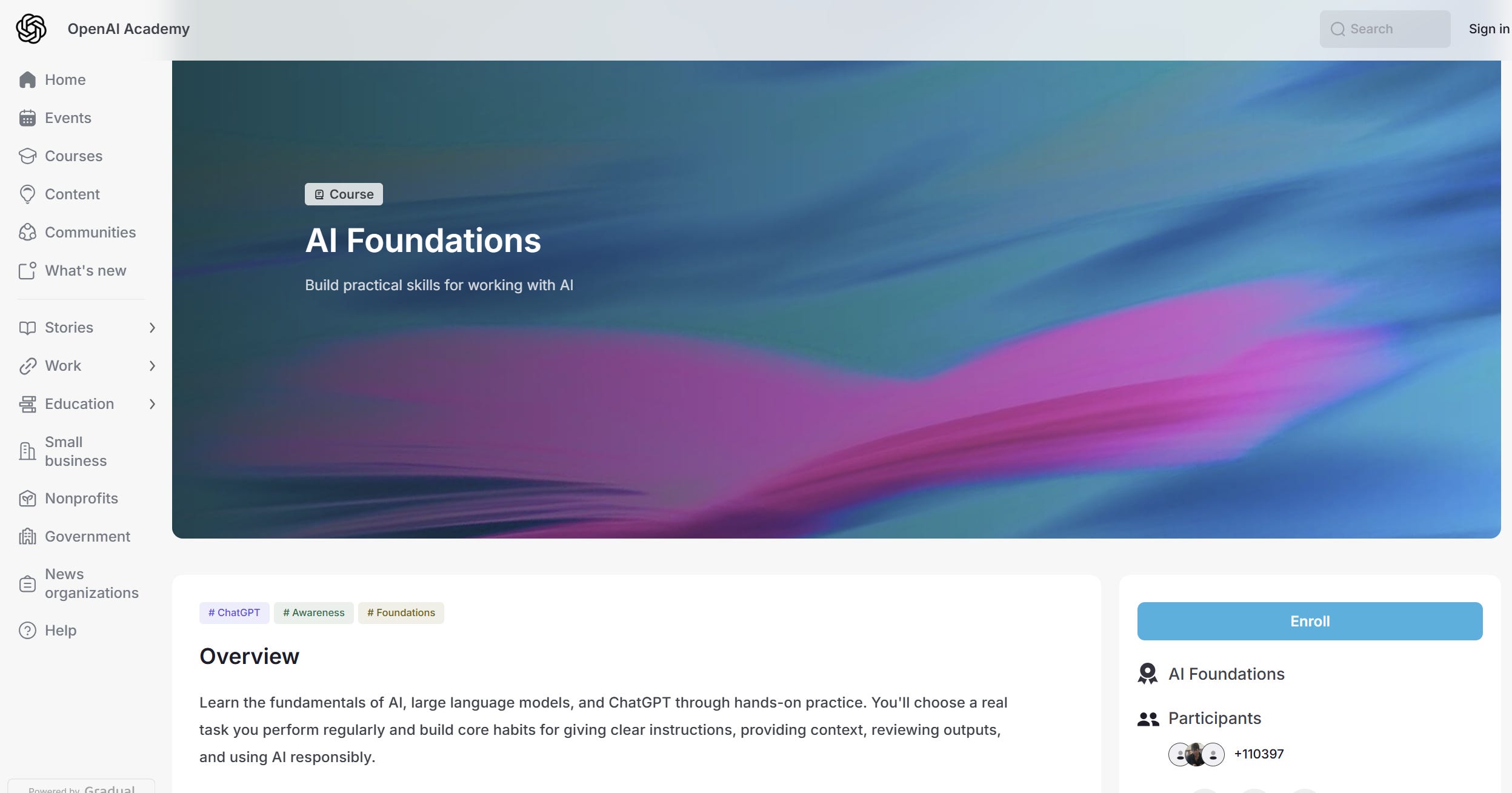
Another cool thing I didn’t know was that ChatGPT had a free AI foundations course. This is a whole course with modules that allows you to dive deeper and learn the tool.
Next cool thing, ChatGPT has a thing called Collections.
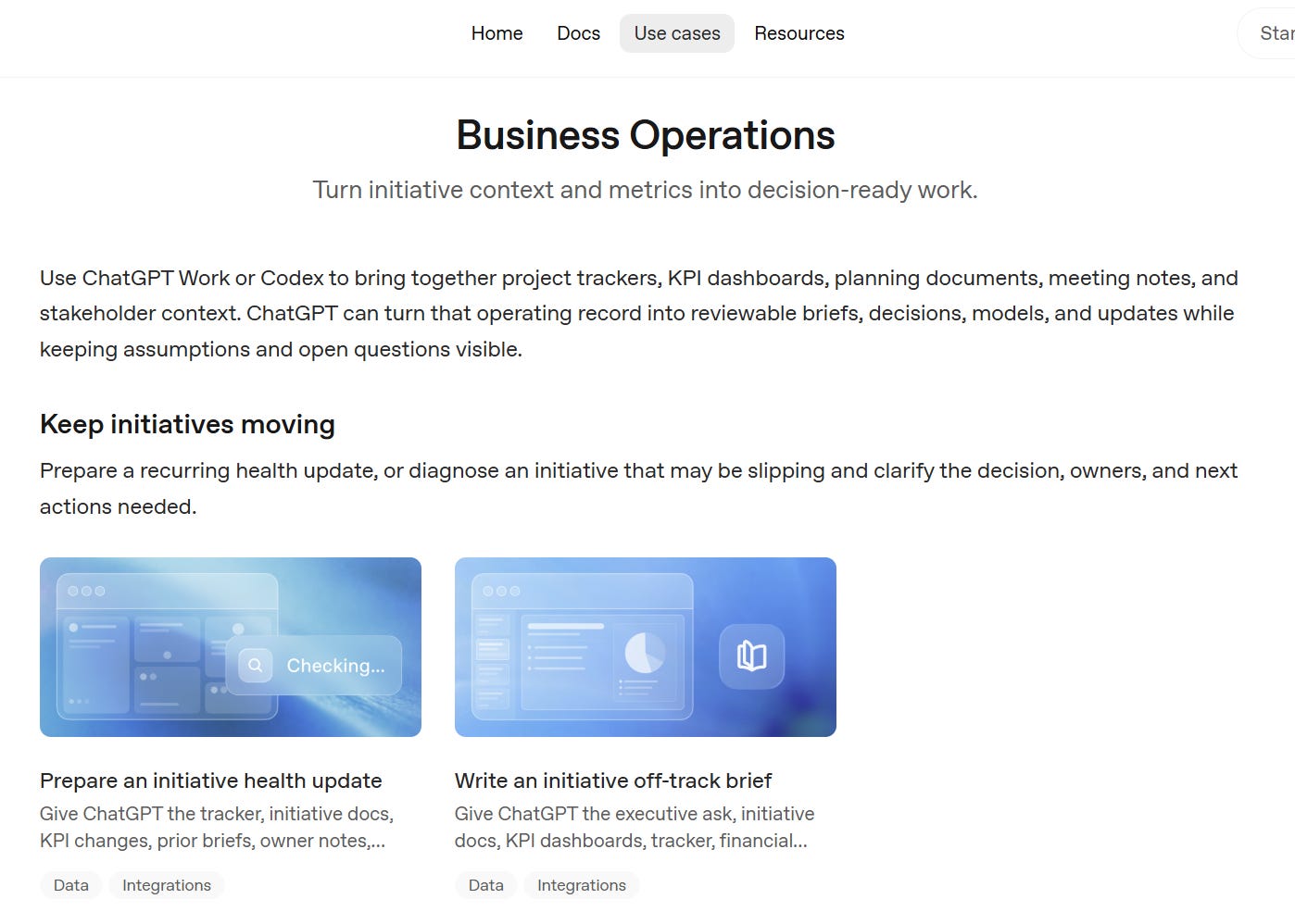
Collections are ready to go workflows for a whole bunch of different use cases. Like this one, which helps you model strategic scenarios and tradeoffs.
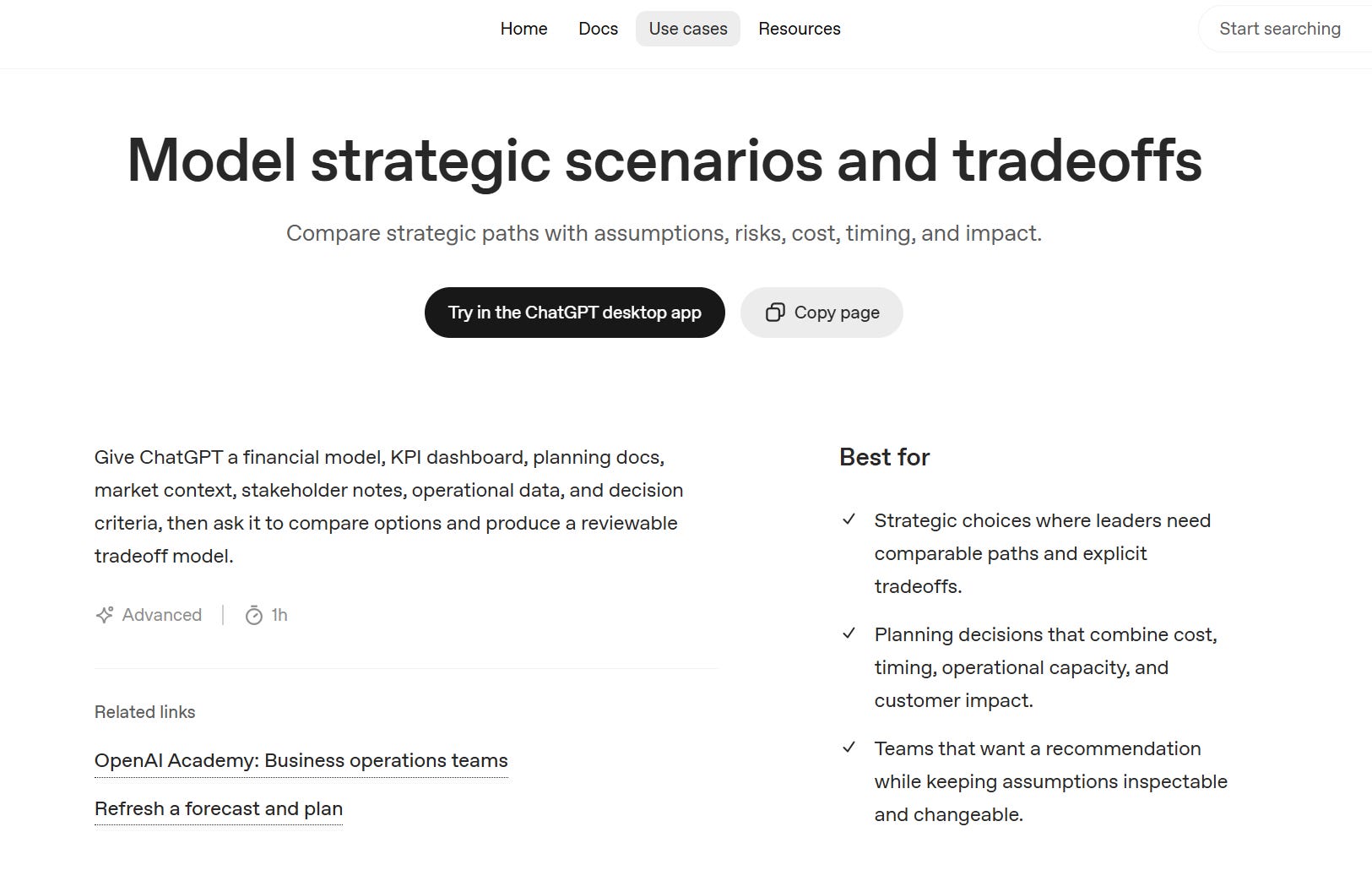
They cover all sorts of different areas, from sales to education.
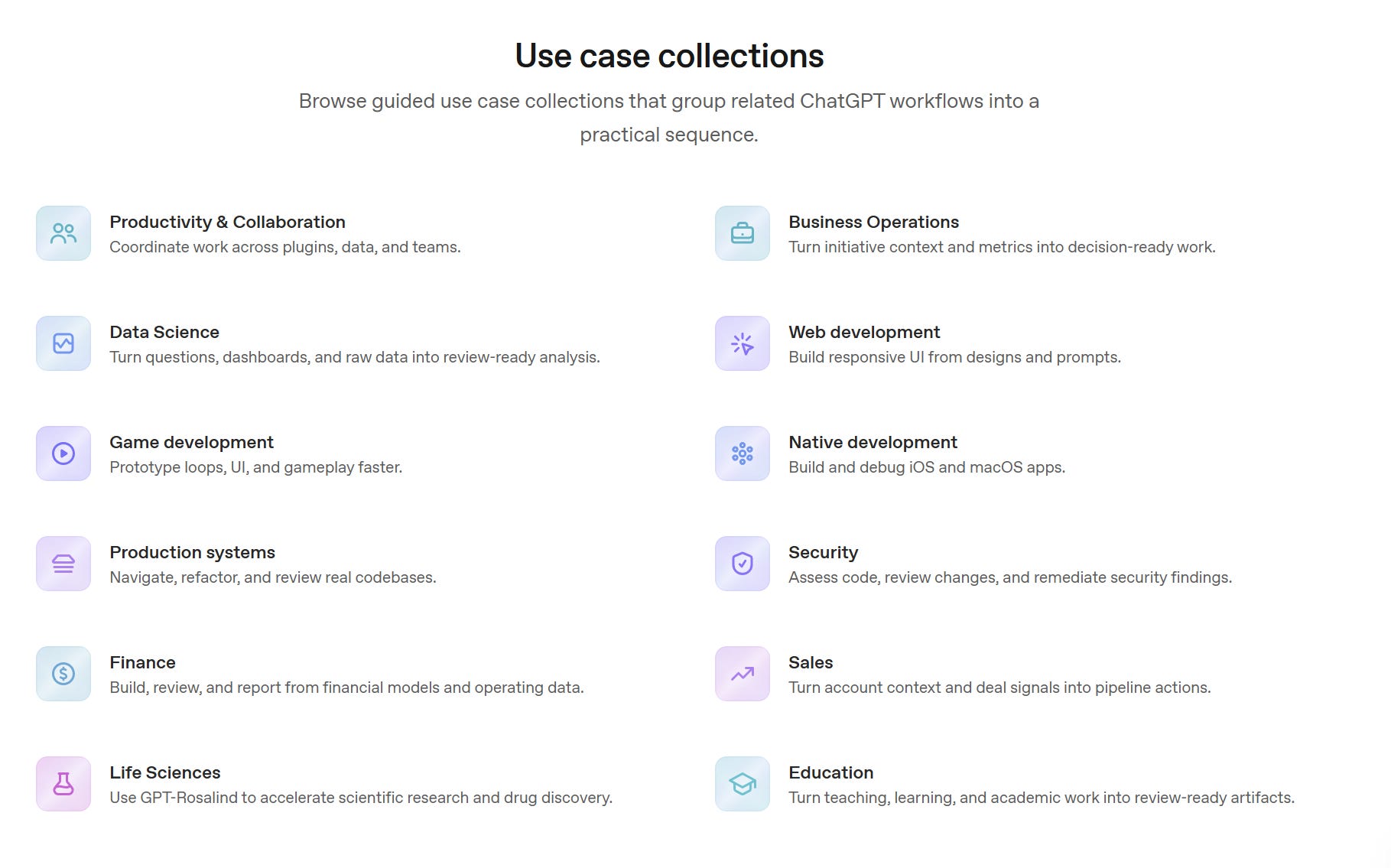
I also learnt that OpenAI has a whole bunch of events that you can register for, such as the ChatGPT Work for business operation teams.
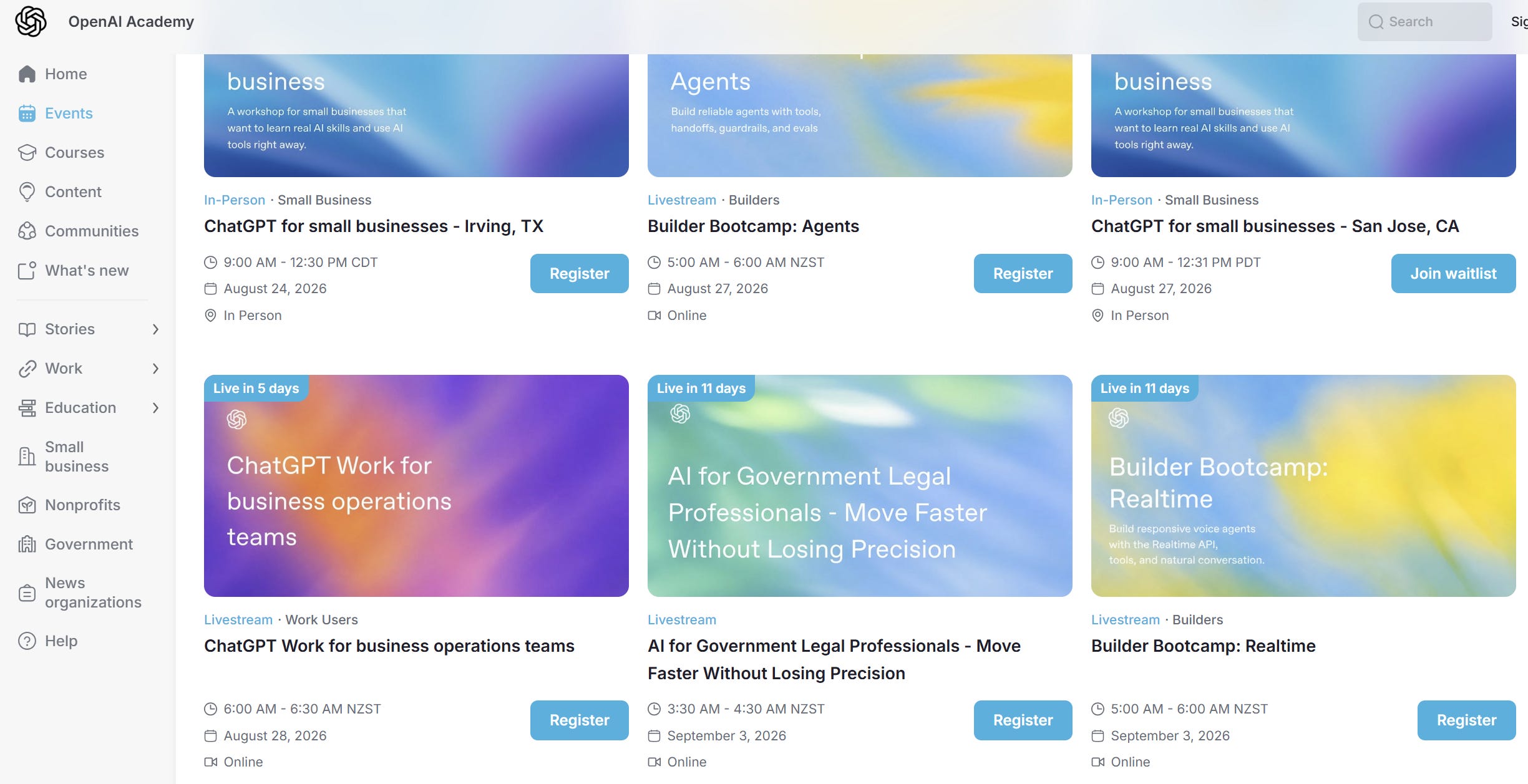
You can view the page here and the events are free.
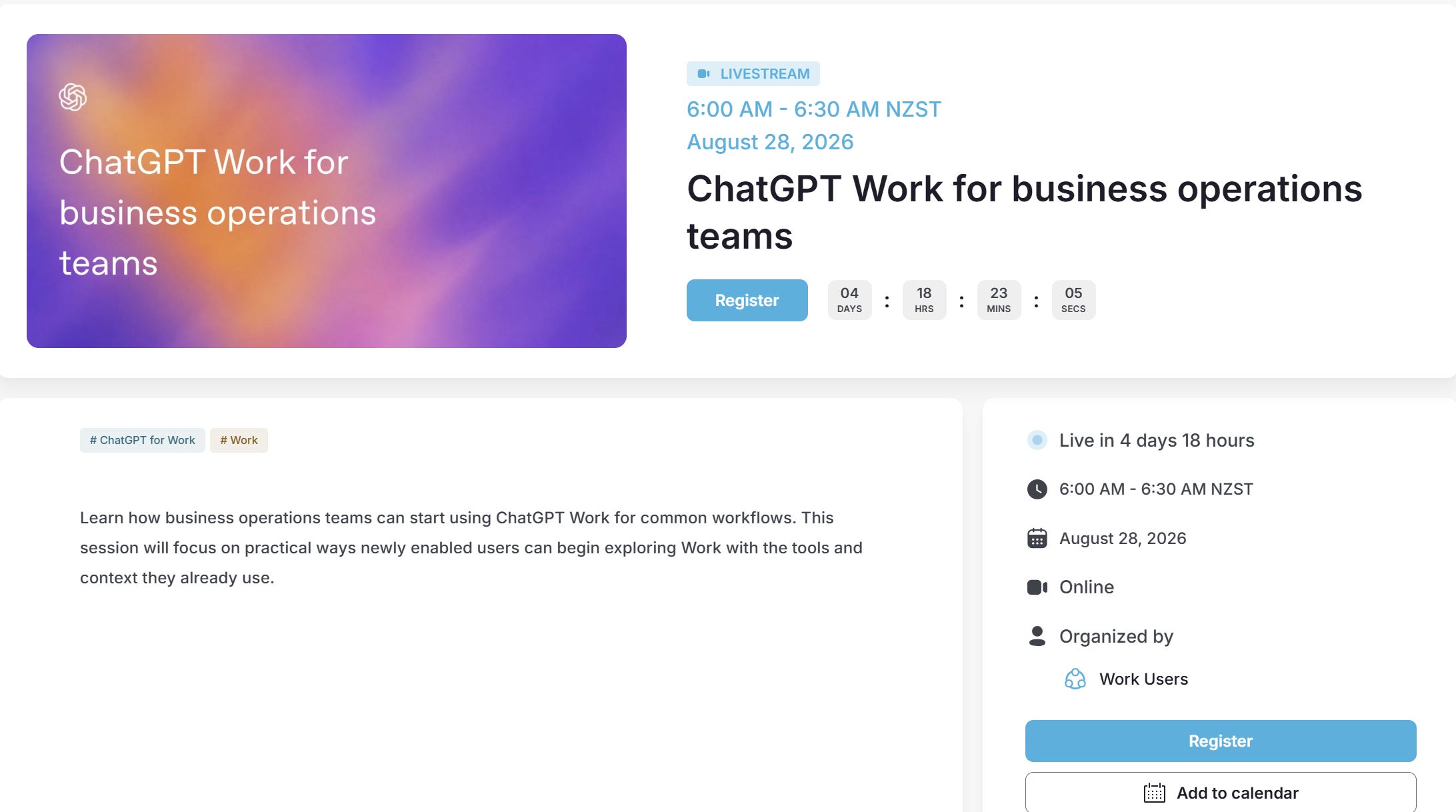
I learnt all that in 20 minutes!
If you are looking for courses/events for your staff, those above links should help you.
And would you look at that, in those 20 minutes I learnt about a whole new feature set called scheduling tasks, that I will now use. That proves my point, because imagine if you were thinking of developing a tool for that, you would have been rebuilding the wheel. That’s the power of reading the instruction manual.
The fourth trick - work backwards from the output
Every system you use usually has an output and it is best to focus on that first.
The goal of an accounting system is to make a profit and loss statement
The goal of a news publishing site is to publish an article
The goal of a timesheet system is to get a report of how much time is spent on jobs
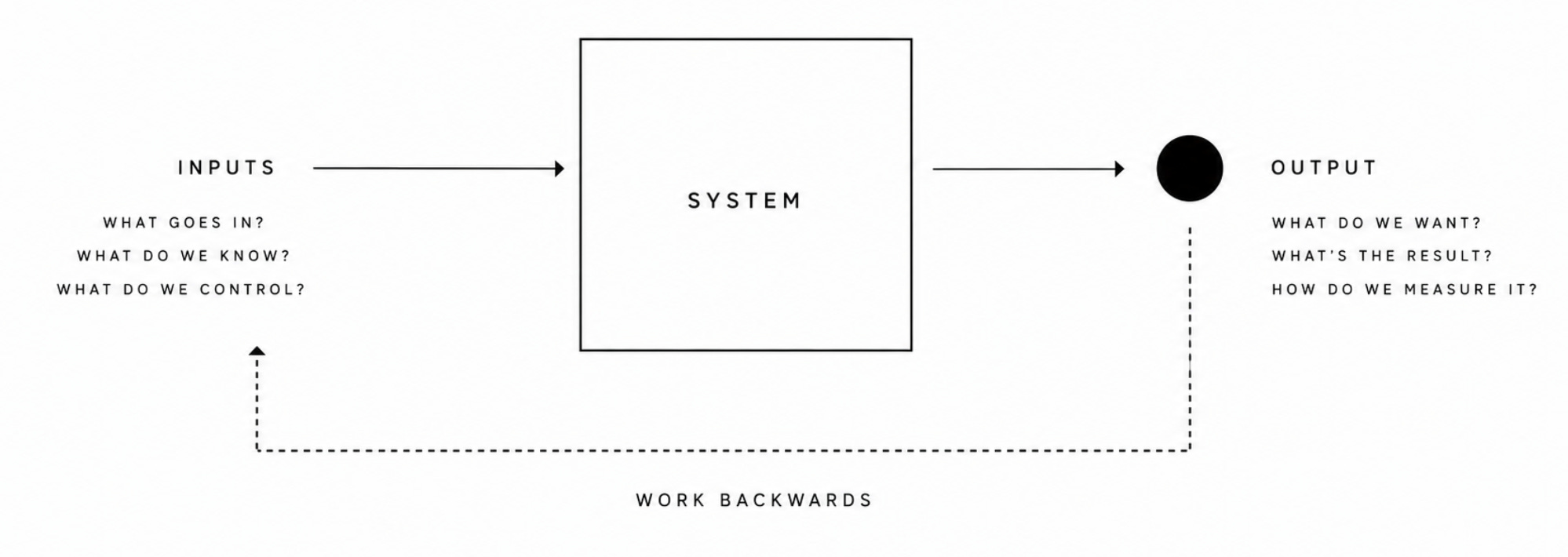
People usually don’t log into systems for absolutely no reason, (ignoring social media for a second). They usually have a job to be done or an output to produce. Everything else is a distraction to that.
I’ll contrast this with how enterprises make systems. They worry about logins first and permissions and roles and security and then everyone forgets what the heck the system was actually for.
Don’t get distracted by all the other features. If there is more than one output, start with one.
My high school English teacher used to say “ATFQ” which means, Answer The F**cking Question” - as most people write essays and don’t ATFQ.
Focusing on outputs is the business equivalent of Answering the F**cking Question. Stop worrying about permissions at first, that is not Answering the F**cking Question.
If we take a pause here and reflect on what we have done.
No one is going to save us and so we are committed to solving the problem ourselves and finding a way.
We have chopped the task up as much as we can.
We have read the instruction manual
We are clear on what the outputs we are driving towards are and we are ATFQ.
If we do all the above we are decluttering and that will then give our brain space to focus on the next three tricks.
Trick Five - Spend 10 times more researching approaches
Now that we have AI there is so many things that you can get for free that will help you solve the problem you are looking at. Most people jump way too quickly into trying to solve the problem without looking at what is out there and available.
Often you might find that just this step alone will solve your entire project and you have just saved yourself thousands of dollars. This happens to me all the time.
I don’t really need to overexplain this. Basically don’t reinvent the wheel and try to build on what others have if you can.
Trick Six - Go way deeper and way more intense than you are
Now that exploration is out of the way and now that we know what the output is, now is the time to go deep.
You will see why you want to declutter everything when you do this next step. Basically the way you think inside the box is you just go way more intense at whatever you are doing than you currently are. Right now most people are doing the equivalent of a jog around the park with AI. Whereas I want you to be like an ultra marathon runner that just goes all in and just eats nuts all day.
That is the level of deep and that is the level of thinking inside the box that you need to do.
I bet you that we as the human race are only using ChatGPT to 0.001% of its power and that’s because we haven’t gone deep enough on prompting and understanding the way to get the most out of it.

Yet there is so much to be learned. The optimal way to prompt, testing 50 different styles, testing the different models, playing around with memory and seeding document and knowledge context are all a starting point. You could always get better and go deeper on ChatGPT.
I once automated an entire companies report systems using just Microsoft Word and a macro, as I wasn’t allowed to use AI or a database. I went super deep on Microsoft Word and found an intense blog of a guy that must have invented it because it was so hardout.
A good example of going deep is this video. This person made Minecraft inside Minecraft by building a computer in the game. The crazy thing is that it is made up of around 8 building blocks that are just repeated in different clever ways.
Here is another example.
This is the developer of Crash Bandicoot. His opening line of the video. “Memory was so short in Crash Bandicoot that I took to stealing bits and pieces of it from the Sony libraries”
Now that is the kind of hardout, deep sentence that you will say. Come back to me when you are stealing memory from OpenAI because what you are doing is so ridiculous.
You can always go deeper! No one was coming to save him! And Crash Bandicoot is still an incredible game all these years later.
The seventh trick - just hit publish, but be consistent
JUST HIT PUBLISH
Thinking inside the box with constraints only works if you build the thing, if you ship the product, publish the video, publish the article, deploy your website, book the customer demo.
AI has made a new class of philosopher.
They have harnesses and tokens and go to market strategies and this and that and there product has 500 tabs and they have complicated sentences about protocols and MCP.
But they haven’t shipped anything.
Hitting publish is a forcing function. It makes you better. It also acts as a constraint, which is what Thinking Inside The Box is all about. If you look at teams that do well, they constantly ship things. Shipping things allows you to iterate and improve.
Most businesses make things too big and launch way too late.
Most people overthink the first version of their side hustle.
I published 50 articles on Medium before I got any views. Now I get more views in a hour than I got in 2 years. Just hit publish and be consistent. It took me 1 year to get 1,000 followers, 1 more year to grow to 6,000 followers and in the last 4 months I’ve grown to 32,000 followers. Just hit publish.
But as Ice Cube says "Life ain't a track meet, it's a marathon," and the next part of hitting publish is iterating and getting better. The most successful artists/creators/musicians/painters/photographers/business people have the most shots and they ship the most things over a long period of time.
Hitting publish makes thinking inside the box real. Again that is why I think sports is so great because you have a deadline and that allows for innovation.
Maybe you could decide to enter into an awards show next year just as a way to force a commitment?
Maybe you could launch your startup next weekend and then ship something every week and aim to do that for 6 months
Sign up to a half marathon and watch how you magically get fitter. The thought of wasting $200 will keep you motivated.
I’ve never had a company that ships quickly fail over the long run. I’ve had heaps of companies that goose around that fail though. Don’t be a goose.
There we go.
Hopefully that is helpful. The next time you start something, personal or professional. Just remember that no one is coming to save you and to be a Harry Hardout nut eating ultra marathon runner that reads the instruction manual and also chops budgets up into four. If this is sounding like a crazy version of Chunk Norris then good that is what I’m after.
You are burning your boat for crying out loud, that is pyschopathic, who burns a boat?
Book Club

Speaking of burning boats and being a badass.
I’ve heard that the The Odyssey by Christopher Nolan is pretty mean but iMax is all booked out for it. But my guess is that if you liked the Odyssey then you’d like this. I’ve read every book by Robert Harris and this one is about Ancient Rome.
Our old mate Julius Caesar shows up and I’m not going to spoil anymore.
Harris writes historical fiction that also blends in real life stuff but its still entertaining and easy to read. Give it a go, Josh/Andrew/Dave - I reckon you will all like this. The Audible version comes out next week.
Other Articles I wrote this week
We made AI better at coding, it sucks at writing, let’s keep it that way

I’m an Amazon affiliate, I get a commission if you make a purchase.